
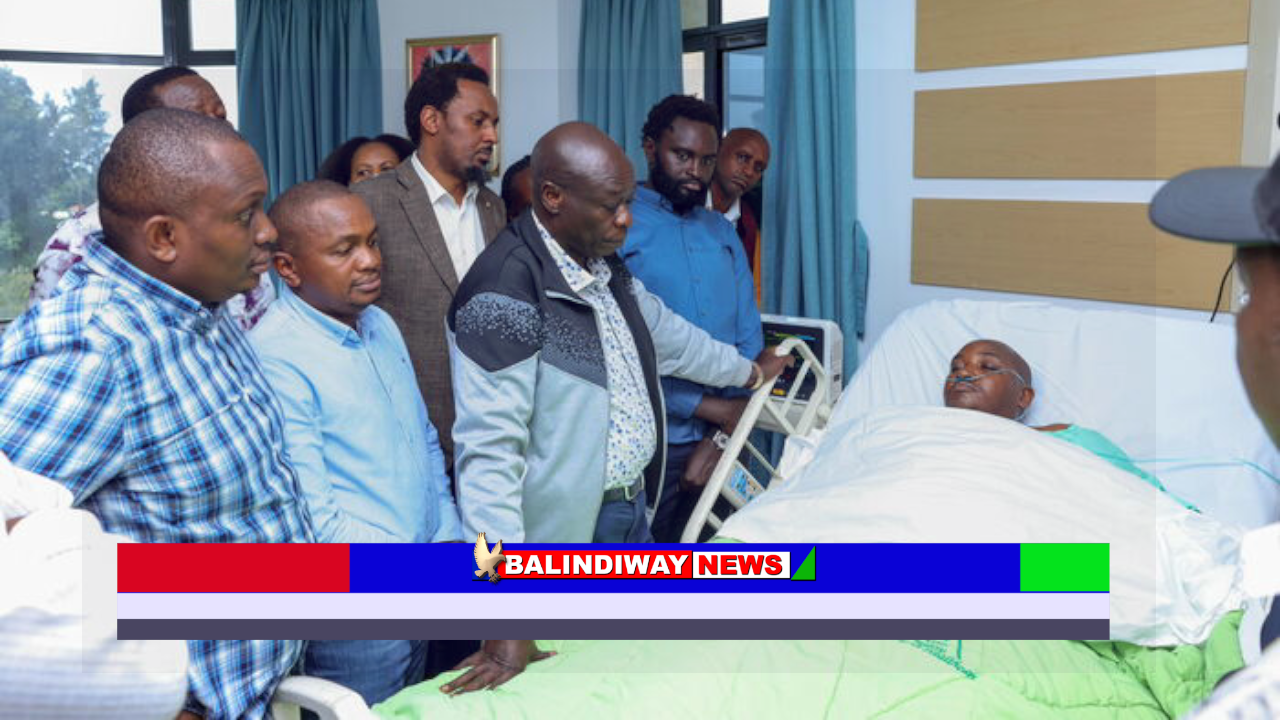
Juja Member of Parliament George Koimburi is staring down serious consequences after the Directorate of Criminal Investigations (DCI) disclosed on Wednesday, May 28, that he allegedly staged his own disappearance.

Inspector General of Police Douglas Kanja, alongside DCI Director Amin Mohammed and other senior officers, announced that three individuals including the Juja Constituency Development Fund (CDF) chairperson have been arrested in connection with the incident.
Authorities believe the group collaborated to simulate the MP’s abduction and torture.
Statements from the suspects have shed light on the incident, leading investigators to conclude that the entire episode was fabricated.
As investigations progress, Koimburi could face severe repercussions potentially including criminal charges, loss of credibility, financial penalties, and even the risk of losing his parliamentary seat.
Once the DCI concludes its probe, the Office of the Director of Public Prosecutions (ODPP) may take up the case.
If sufficient evidence is found, Koimburi could be charged with offenses such as providing false information to police, obstructing justice, and misusing public resources.
The Ethics and Anti-Corruption Commission (EACC) may also step in. If it’s established that Koimburi misled authorities or the public, the EACC could launch its own investigation under Chapter 6 of the Constitution, which outlines standards for leadership and integrity.
Although the EACC cannot directly remove an MP, it can forward findings to the ODPP or recommend court action.
Parliament, too, has disciplinary mechanisms. The Powers and Privileges Committee, chaired by National Assembly Speaker Moses Wetang’ula, has the authority to investigate and take action against MPs who damage the image of the legislature.
The committee can summon Koimburi, hold hearings, and recommend sanctions, including reprimand, suspension, or referral for further investigation.
Beyond institutional consequences, Koimburi may face backlash from his constituents. Under the Constitution, citizens can initiate a recall process at the end of an MP’s term if they are found guilty of gross misconduct or violations of integrity standards.
Any Juja voter may petition the Independent Electoral and Boundaries Commission (IEBC) with signatures from at least 30% of registered voters. If approved, a recall referendum would be held and a successful vote could lead to Koimburi’s removal and a by-election.