
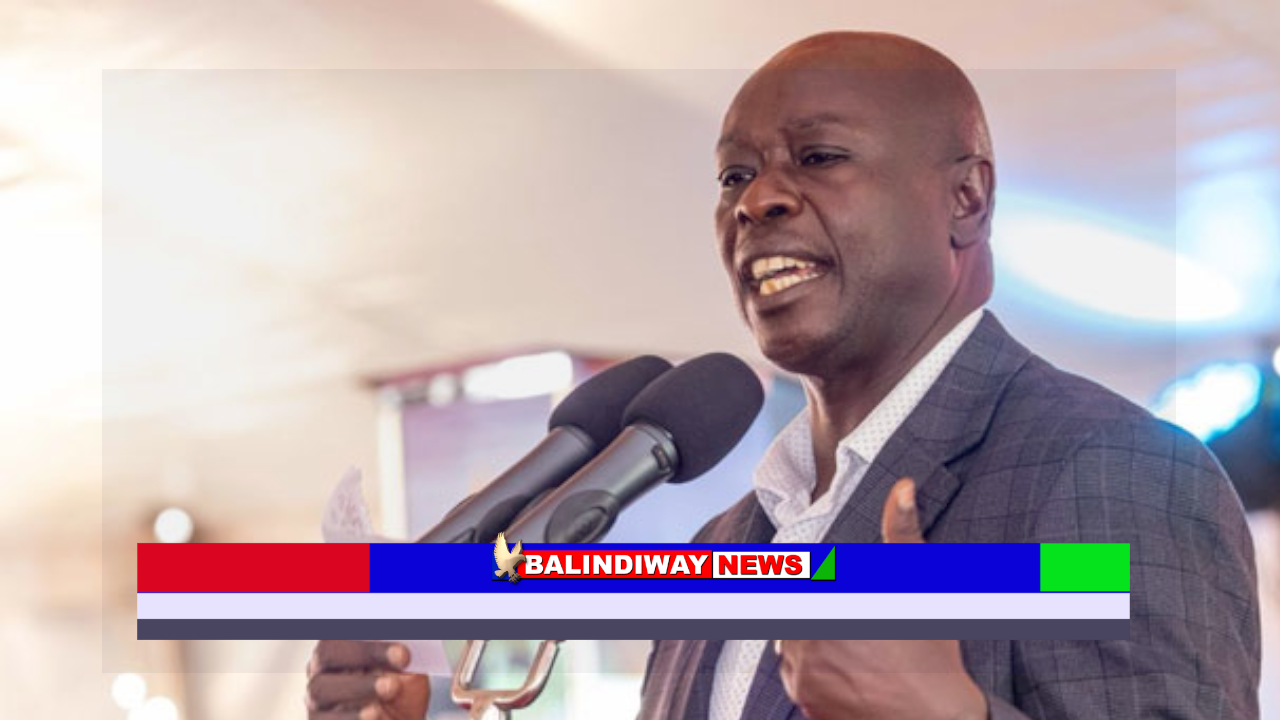
Former Deputy President Rigathi Gachagua has made serious accusations against the Kenya Kwanza administration, claiming there was a government-backed plot to assassinate him.

Speaking from his Karen home on Monday, May 19, Gachagua alleged that state agents had been instructed to eliminate him on Sunday, May 18.
According to him, he received intelligence while attending a church service in Gatanga Constituency, Murang’a County, warning that the President had issued a directive to “deal with him once and for all.”
“While at the church service yesterday, I got reports that there were clear orders to eliminate me,” Gachagua stated in the press briefing.
He further claimed that previous attempts to harm him using hired goons had failed, prompting state security agencies to take over the alleged mission.
“Because the goons had not succeeded in previous attempts, they brought in the police and other government security agencies,” he added.
Gachagua also claimed that on Sunday afternoon, police officers who he described as patriotic and opposed to the mission tipped him off about a plan to plant weapons in his convoy.
The aim, he said, was to create false evidence that could justify his arrest.
“These officers informed us that there were specific instructions to plant arms and other weapons in our vehicles. That way, they could have something to charge us with in court,” he said.
The press conference came after reports that multiple police units surrounded Gachagua’s homes in Karen and Wamunyoro on Sunday evening.
His lawyer and ally, Ndegwa Njiru, raised the alarm about the late-night deployments.
Gachagua said he had not received any official summons from the Directorate of Criminal Investigations (DCI), but revealed that his team had to take a different route to Karen to avoid being intercepted. He claimed this move was necessary to protect his security team from being disarmed.
Tensions around Gachagua intensified last Friday following his remarks suggesting that the 2027 general elections could turn chaotic if the Independent Electoral and Boundaries Commission (IEBC) fails to ensure transparency.
On Sunday, he defended those comments, insisting they were not incitement but a warning based on Kenya’s electoral history.
“My statement was not meant to incite violence,” he said. “It was a cautionary message based on the events of 1992, 1997, and 2007. We must ensure the 2027 elections are free and fair.”