
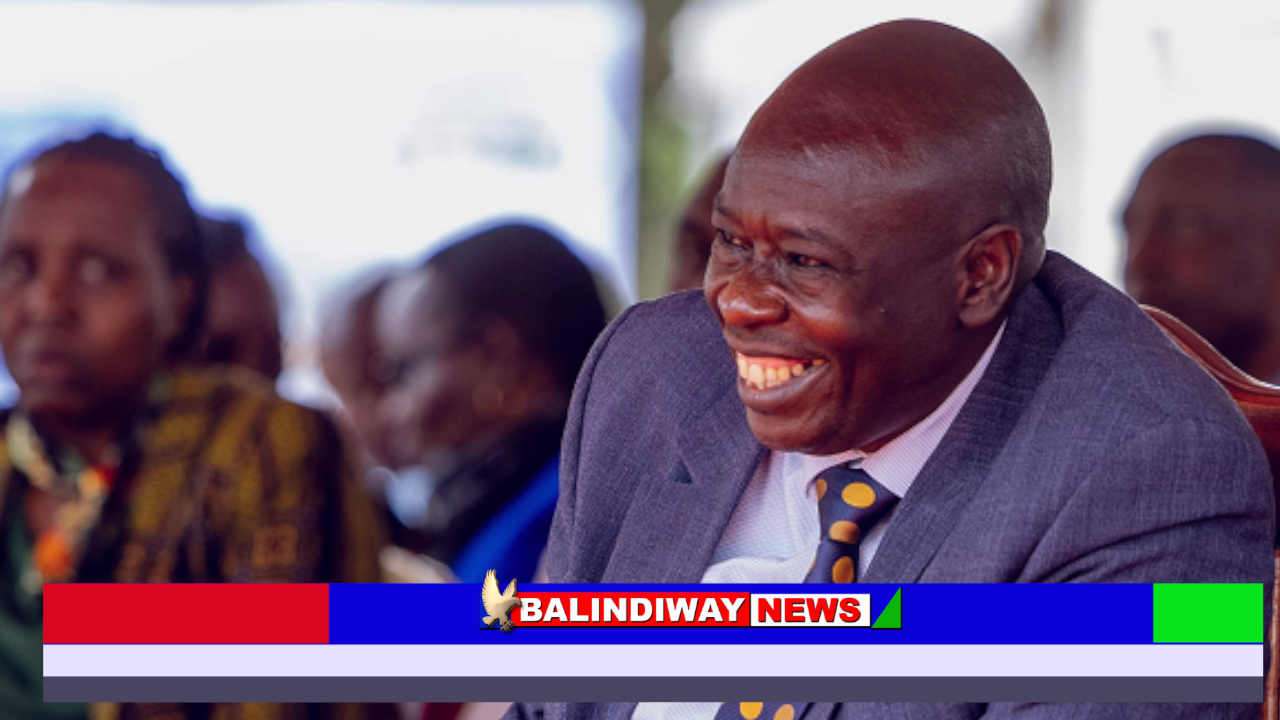
On Friday, May 9, the Court of Appeal ruled that Deputy Chief Justice (DCJ) Philomena Mwilu acted unconstitutionally by appointing a three-judge bench to hear the impeachment case of former Deputy President Rigathi Gachagua.

As a result, the court disbanded the panel comprising Justices Anthony Mrima, Frida Mugambi, and Eric Ogolla and ordered Chief Justice Martha Koome to appoint a new bench within 14 days.
The appellate panel, consisting of Court of Appeal President Daniel Musinga and Justices Mumbi Ngugi and Fred Ochieng, determined that only the Chief Justice has the constitutional authority to constitute a multi-judge bench.
Moreover, the court noted that DCJ Mwilu had failed to communicate the reasons for her decision to all involved parties, which potentially violated constitutional procedures.
In its ruling, the court stated:
“While we do not question the good faith of the Deputy Chief Justice in constituting the bench, it is essential that the reasons why the Chief Justice did not perform this constitutionally reserved role be clearly communicated to both the parties and the public. These reasons should also be outlined in the empanelment order.”
The judges also rejected the argument that the case could not be decided without including either the Chief Justice or Deputy Chief Justice as parties. They clarified that the Chief Justice’s silence could not be interpreted as approval of DCJ Mwilu’s actions.
Additionally, the court found no evidence that Mwilu was acting as Chief Justice at the time, nor did she demonstrate any exceptional circumstances that would justify exercising the Chief Justice’s powers.
This decision could mark a turning point in Gachagua’s legal battle, potentially opening the door to a new judicial perspective.
However, while the former Deputy President may view this as a hopeful development, a favorable outcome is not guaranteed under a newly appointed bench.
On October 18, 2024, DCJ Mwilu had named Justices Ogolla (presiding), Mrima, and Mugambi to hear petitions filed by Gachagua and his allies.
These petitions challenged his impeachment and sought to prevent Professor Kithure Kindiki, his successor, from assuming office.
Gachagua opposed Mwilu’s appointments, arguing that, as Deputy Chief Justice, she lacked the authority to empanel the bench.
He initially took the matter to the High Court, which upheld Mwilu’s decision and refused to disqualify the appointed judges.
The legal process now enters a new phase, six months after Gachagua’s impeachment was passed by the National Assembly and upheld by the Senate.