
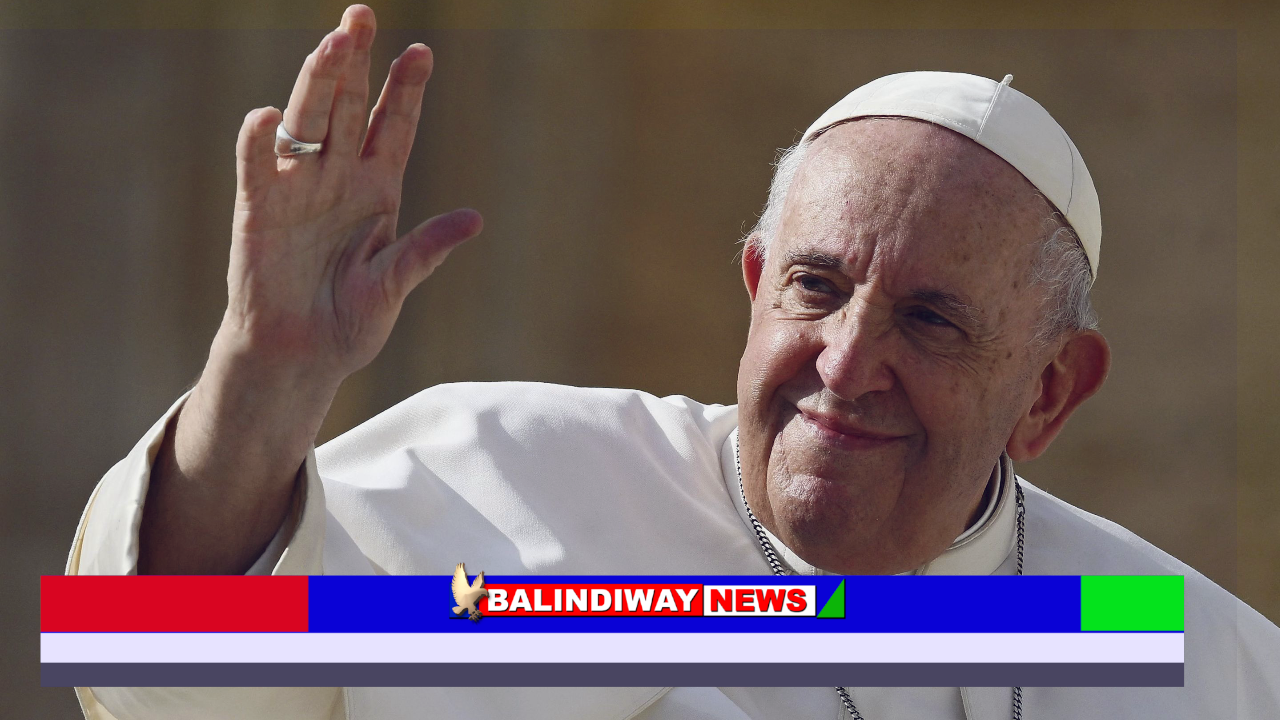
Vatican News has officially confirmed the passing of Pope Francis, the head of the Roman Catholic Church.

According to the report, the Pope died on Easter Monday, April 21, 2025, at the age of 88, following a prolonged battle with double pneumonia.
According to a statement shared via Vatican News on social media, “Pope Francis died on Easter Monday, April 21, 2025, at the age of 88 at his residence in the Vatican’s Casa Santa Marta.”
The Pontiff was first admitted to Rome’s Gemelli Hospital on February 14, suffering from what was initially diagnosed as bronchitis.
His condition later progressed to bilateral pneumonia, and he remained bedridden for more than a month.
During his hospitalization, Pope Francis experienced critical respiratory complications, including episodes of acute respiratory failure.
He underwent several bronchoscopies to clear mucus buildup and was treated with non-invasive mechanical ventilation.
After a five-week stay, he was discharged on March 23 and made a brief public appearance from a hospital window to offer a blessing.
On Sunday, just a day before his death, Pope Francis held a meeting with U.S. Vice President JD Vance—his first major engagement since leaving the hospital.
Born Jorge Mario Bergoglio in 1936 in Argentina, Pope Francis was elected in 2013, becoming the first Jesuit pope and the first from the Americas. His papacy has been marked by a focus on social justice, environmental stewardship, and efforts to reform the Church.
Throughout his life, the Pope struggled with various health issues. As a teenager, he lost part of one lung due to a severe infection, and in later years, he frequently suffered from respiratory ailments.
In 2021, he underwent intestinal surgery to treat diverticulitis, and in 2023, he had abdominal surgery for a hernia.
He also faced chronic knee pain, primarily in his right knee, caused by osteoarthritis. This often limited his mobility, leading him to use a wheelchair or cane.
Despite his health challenges, Pope Francis remained a powerful voice on global issues, advocating for migrants, addressing economic inequality, and urging greater inclusion within the Church.
His leadership also faced significant resistance from within, particularly over his progressive views on Church doctrine, including matters related to LGBTQ+ rights and clerical celibacy.
His legacy as a compassionate reformer and global spiritual leader leaves a lasting impact on the Catholic Church and the world.