
A landmark UK court ruling has opened a long-awaited path to British citizenship for children born to British soldiers and Kenyan women, offering recognition to families who say they have lived for decades without support and acknowledgement.

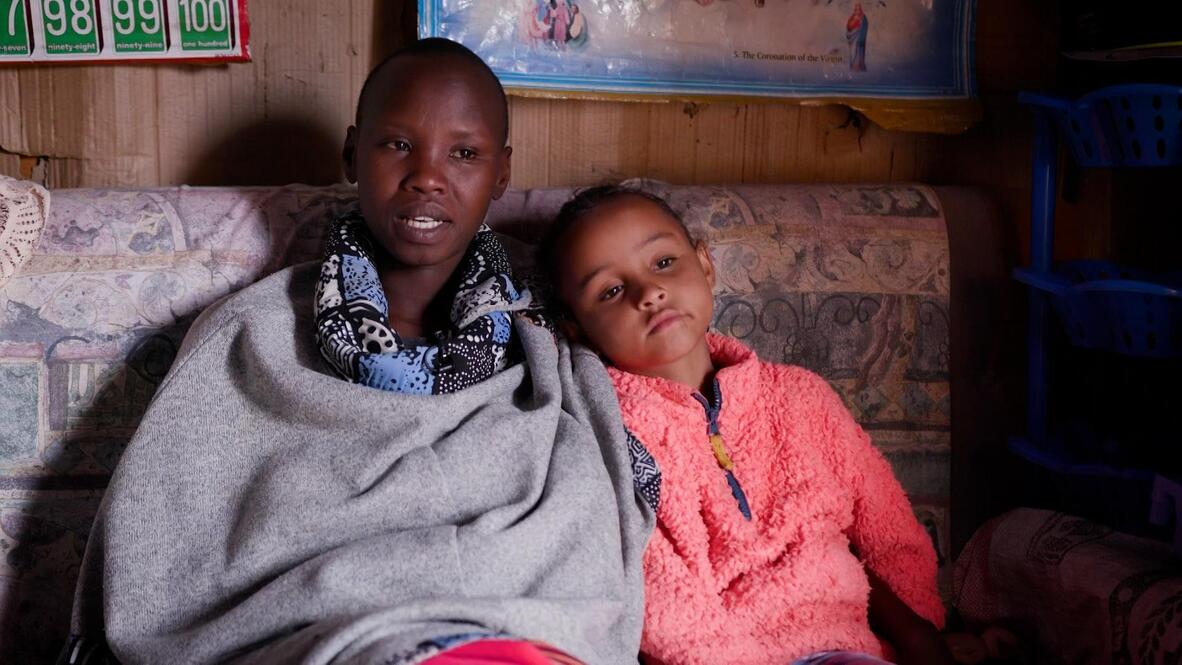
Among the seven Kenyans who recently won their cases at the Family Court in London is Nanyuki resident Jenerica Namoru, the mother of six-year-old Nicole Ivy, whose father is identified as a serviceman, formerly of the British Army Training Unit Kenya (Batuk). It is the first time that paternity has been legally established in this way in a UK court.
Namoru described years of hardship, with the ruling representing her first real hope that her daughter may finally receive the rights and protections she has long been denied.
Her wish, she said, is that “the UK government will consider my child to get citizenship, access good education as well as health.”
But she also detailed the daily struggle of raising a child without financial support and without medical cover following Kenya’s shift to the Social Health Authority (SHA). “If she falls ill, we will be stranded and just rush to the chemist. We also need to have a home, right now we are renting, and life is hard. I am jobless, I don’t have work,” she said.
Namoru’s frustration reflects a wider sense of abandonment felt by many women in Laikipia and Samburu counties, where British soldiers have been stationed for decades.
“Sometimes there are many cases when these British soldiers come for training… sometimes you find there are rape cases. And other cases of British soldiers instead of fathering children, they run away and don’t take care of them,” she said.
She added that the historical imbalance between the UK and Kenya still affects families like hers.
“For now it is very challenging because we are independent and we are supposed to stand up for ourselves. But now you find they colonised us and they are still in our country. So it’s just like we are still under colonialism because they are still in Kenya.”
Speaking about Nicole’s experiences, Namoru described both affection from the community and daily discrimination.
“She is six years old. It’s been very hard. When she goes to school other kids call her ‘mzungu’. They check her hair, her skin to confirm if she is white.”
Despite the court victory, Namoru said she is losing patience with bureaucratic delays.
“I don’t have hopes because the year is coming to an end. I never thought it would take this long. The child needs support immediately,” she said.
The cases were supported by commercial DNA databases used to identify the fathers, six of whom served at Batuk and one who worked as a contractor. Batuk was established in 1964, shortly before Kenya gained independence. Its presence has drawn scrutiny in recent years amid allegations ranging from environmental damage to abuses committed by individual soldiers.
Responding to the renewed attention, the UK Ministry of Defence said that “unacceptable and criminal behaviour has absolutely no place in our Armed Forces,” emphasising that any serious crime reported by serving personnel is investigated independently of the military chain of command.