
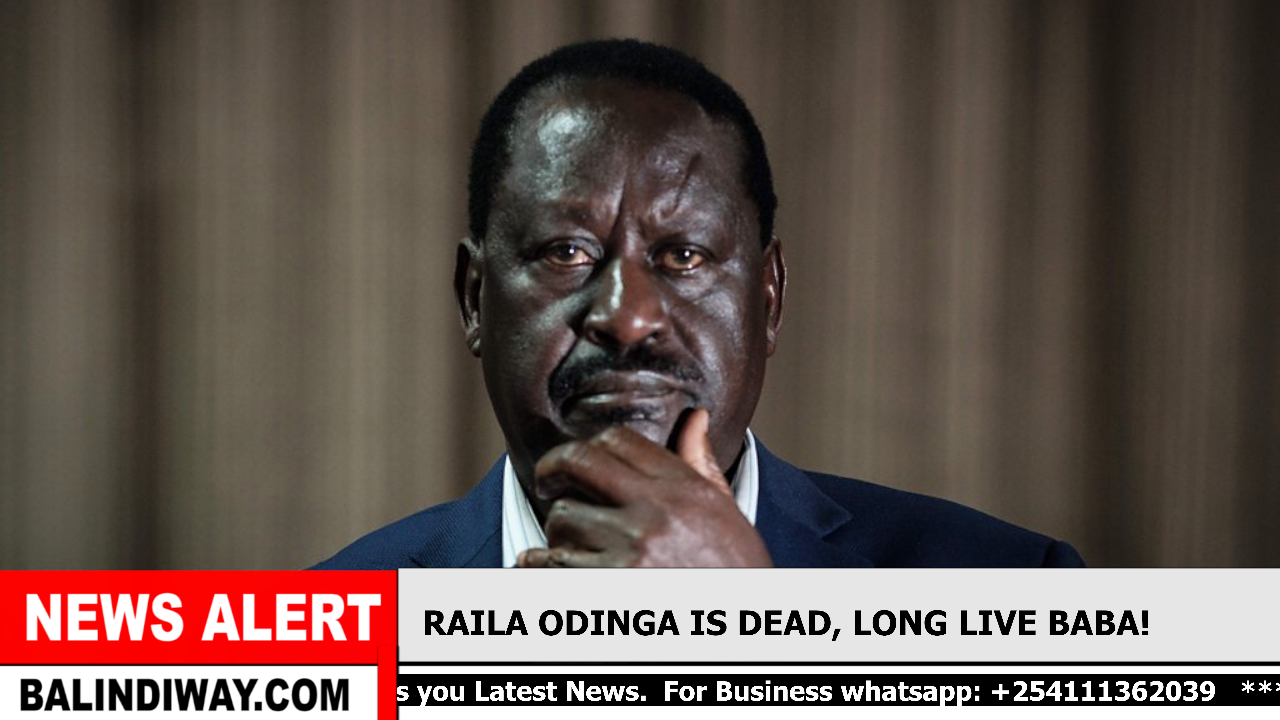
The death of Raila Amolo Odinga marks the end of an era in Kenya’s political history. For more than four decades, Raila stood as a towering figure, both as a symbol of opposition and as a relentless advocate for democracy and reform.

His passing leaves a political vacuum that few can easily fill. To many Kenyans, Raila was not just a politician but an institution, one whose influence shaped the country’s governance, opposition movements, and the broader struggle for constitutional change.
Raila’s political journey has been deeply intertwined with Kenya’s modern history. From his fight against the Moi regime in the 1980s, to his key role in the 2002 transition that ended one-party dominance, and his repeated presidential bids that kept the government accountable, Raila’s impact remains unmatched. His death signals the collapse of a political era defined by charisma, defiance, and a deeply personal connection with ordinary citizens. Without him, the opposition landscape is already showing signs of fragmentation and uncertainty.
The Orange Democratic Movement (ODM), which Raila founded and led, now faces its greatest test of survival. While the party enjoys strong grassroots support, it has long revolved around his personality and authority. A succession struggle is emerging among his allies and family members, with figures such as his daughter Winnie Odinga and long-time associates like Hassan Joho and Wycliffe Oparanya seen as possible heirs to his political mantle. However, replicating Raila’s national appeal appears nearly impossible.
Nationally, Raila’s death shifts the balance of power between the government and the opposition. President William Ruto and his allies face reduced political pressure, as Raila had been their most consistent and vocal challenger.
The absence of a unifying opposition voice could create instability within the ruling coalition itself, as competing factions begin to jostle for dominance in a new political order. Kenya’s democracy, which thrives on strong opposition, faces an uncertain period of adjustment.
Beyond politics, Raila’s death carries immense emotional weight for millions of Kenyans. He was affectionately known as “Baba,” a father figure who championed justice, equity, and inclusion. His legacy in pushing for multi-party democracy, devolution, and electoral reforms remains deeply rooted in Kenya’s political consciousness.
Tributes continue to pour in from across the country and beyond Africa, honoring him as one of the continent’s most resilient and respected statesmen.
Ultimately, Raila Odinga’s passing closes a monumental chapter in Kenya’s political story. His death forces the nation to confront a future without one of its greatest opposition icons and to redefine leadership beyond personality-driven politics.
Whether Kenya emerges stronger or more divided will depend on how his followers, rivals, and the country as a whole choose to carry forward his vision of a just and democratic society.